
86 13686388557

Date:2026-09-21
A remote control lawn mower looks simple from a distance. You hold a transmitter, move a lever and the machine cuts the grass. In actual operation, the difficult part is rarely the controls themselves. It is the decisions around them: where you stand, which direction the tracks are travelling, how the machine reacts to the terrain, and what you do the moment the signal disappears.
This guide covers the full operating routine, from the first inspection to the end-of-shift clean-down. It is written for someone standing in front of a new RC mower and preparing to use it, rather than someone trying to work out what went wrong after a machine has already entered a difficult situation.
Before the blades turn, spend time with three things: the transmitter, the emergency stops and the ground under your boots.
Most commercial transmitters have a spring-return throttle, a left-right steering control, an instant-stop switch and a separate channel for the blades or cutting deck. Find the dead man's switch first. On many machines, it must be held continuously during operation. Releasing it should stop the drive and cutting attachment according to the machine's safety design.
Do not start mowing until you know which control stops the machine immediately. It is much easier to find the emergency function while the mower is stationary than when it is moving toward an obstacle.
Locate the onboard kill switch and the battery or fuel cut-off. Check the receiver and antenna arrangement as well. The receiver needs a clear and reliable signal path, so make sure it has not been covered, damaged or obstructed by components added during maintenance.
A few minutes spent tracing these controls before the first job is much cheaper than trying to locate them beside a stalled machine on a slope.
Walk the working area on foot first. Look for rabbit holes, loose rocks, wet patches, stumps, drainage channels and anything that could catch a track or suddenly change the machine's traction.
Choose the operator's standing position before starting the machine. On a slope, the high side is generally the safer place to work from when the site layout allows it. From that position, you should be able to see the entire cutting area while keeping the transmitter in a comfortable position where all controls remain accessible.
SAFETY FIRST: If you only remember one thing, make it this: the operator never stands below the machine and never positions themselves between the machine and its direction of travel.
A two-minute inspection can prevent many mid-job failures. Run through it before every shift, not only at the beginning of the working week.
| Area | Check | Action if faulty |
|---|---|---|
| Blades or flail | Secure, sharp, no cracks | Replace before starting |
| Deck | Clean, no trapped debris | Scrape and clear |
| Tracks and rollers | No cracks, paddles intact | Repair or replace |
| Belts and guards | Tension correct, guards in place | Adjust or refit |
| Fuel or battery | Level and connections | Top up or recharge |
| Transmitter | Charge, antenna, lever returns | Charge or repair |
| Emergency stop | Both stops stop the machine | Do not operate |
Test the loss-of-signal response on flat, open ground with the blades switched off. Follow the procedure specified in the machine manual. Confirm that the machine stops within the response distance stated by the manufacturer.
If the machine continues moving after a loss of signal or the emergency system does not respond correctly, do not take it onto a slope. Find the cause before starting normal operation.
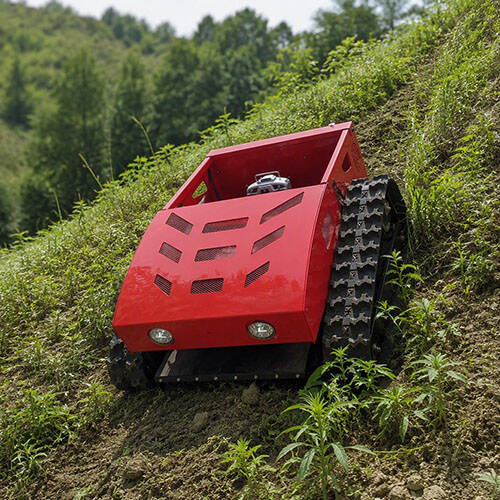
Start on flat, clear ground. Switch the transmitter on before the machine, confirm the communication link indicator and keep the drive control in neutral. Start the engine or enable the battery system according to the manufacturer's procedure.
Bring the blades up to operating speed only after checking that nobody is within the machine's working radius and that there are no loose objects that could be thrown from the deck.
Now make four gentle checks before moving toward the cutting area:
Drive forward and reverse for a few metres to confirm that both tracks respond evenly.
Engage the blades and listen for unusual vibration, knocking or other abnormal sounds.
Turn the machine in a controlled circle to confirm that steering response is predictable.
Raise the transmitter to a comfortable operating position and move sideways to confirm signal range and response.
Only when all four checks feel normal should you move to the cutting area. The first strip of grass is not the place to discover a sticking lever, uneven track response or an unreliable transmitter connection.
On flat ground, the basic mowing method is similar to operating other types of mowers: overlap each pass slightly and maintain a steady working pace. The main difference is that you are observing the cutting result from outside the machine rather than sitting or standing directly behind it.
A few points are worth keeping in mind:
Watch the discharge, not only the machine. On a flail deck, material should leave the cutting area in a controlled pattern. If the mower starts producing heavy clumps, reduce the travel speed and allow the deck more time to process the vegetation.
Turn at the end of each pass carefully. Keep the blades engaged during a turn only if the machine manual allows it. Many decks discharge to one side, and repeatedly turning in one position can leave a concentrated pile of cut material.
Make reversing deliberate. Reverse in a controlled straight line, check the area behind the machine and then turn. Do not make rapid steering corrections while reversing.
Keep the transmitter steady. Constant small steering corrections make the machine less predictable, increase track wear and can leave an uneven finish.
The main reason to use a remote control lawn mower is often terrain that is unpleasant or unsafe for an operator to walk across. That does not mean the slope should be treated casually. Use the same fixed routine every time.
| Slope situation | Right technique | What to avoid |
|---|---|---|
| First time on a new slope | Mow one strip across the contour | Charging straight up |
| Long run | Work up and down in stages | One long continuous climb |
| Wet or loose ground | Reduce speed, lower blade speed | High-speed turns |
| Obstacles | Stop, inspect, then proceed | Plowing through unseen debris |
| Losing traction | Reverse gently to firmer ground | Spinning the tracks |
For machines and sites where the manufacturer's operating procedure permits contour mowing, working across the slope can provide a more consistent cutting pattern and keep both tracks working against the terrain. Move the machine up or down the hill at the end of each strip with the cutting attachment raised when the machine procedure allows it, then lower the deck for the next pass.
Always follow the mower manufacturer's stated slope limits and operating procedure. The correct direction of travel can depend on the machine's centre of gravity, track design, safety system and the specific terrain.
ON THE SLOPE: If the machine begins to slide, do not spin the tracks in an attempt to force it forward. Stop the drive, keep the cutting system engaged only if the machine's safety procedure permits it, and move the machine slowly toward firmer ground using the recovery procedure specified by the manufacturer.
Problems are part of operating working equipment. The difference between a short interruption and serious machine damage often comes down to what the operator does during the first few seconds.
If the machine stops responding, use the emergency-stop procedure immediately. Wait and move to a clear line of sight only when it is safe to do so. Do not walk toward the mower until you have confirmed that it is stationary.
Once the machine is secure, check the transmitter battery, receiver status and antenna position before attempting to restart. If the signal problem cannot be identified, do not continue operating on a slope.
Raise the cutting attachment if the machine procedure allows it, reverse in a straight line and stop to inspect the obstruction. Never continue driving forward simply because the machine has not cleared the obstacle.
A damaged obstacle can usually be replaced. A bent deck, damaged track or broken drive component can stop the entire working day.
If the machine begins to slide or roll, your first priority is to move away from it. Do not attempt to physically stop or catch a moving machine.
Wait until the machine has stopped completely. Only then should you approach it, and only after following the machine's shutdown procedure and isolating the power source at the machine when required.
IF IT TIPS: Never try to catch a sliding machine. Step clear, wait for it to stop and then deal with the recovery according to the manufacturer's procedure.
A proper shutdown is also the start of an easier next shift. On flat, stable ground, follow the manufacturer's shutdown sequence. The basic order in this guide is: lift the blades, disengage the cutting channel, bring the machine to a complete stop, switch off the transmitter and then switch off the machine.
After switching off:
Scrape grass from the deck while it is still warm, provided the machine is fully stopped and the procedure can be carried out safely.
Check the tracks, blades and belt guards.
Charge or refuel as required, away from the cutting area and according to the manufacturer's safety requirements.
Record the operating hours in the logbook.
Keeping a simple operating log is useful for commercial machines. Recording hours, wear-part replacement and unusual operating problems makes it easier to plan maintenance instead of waiting for a failure in the field.
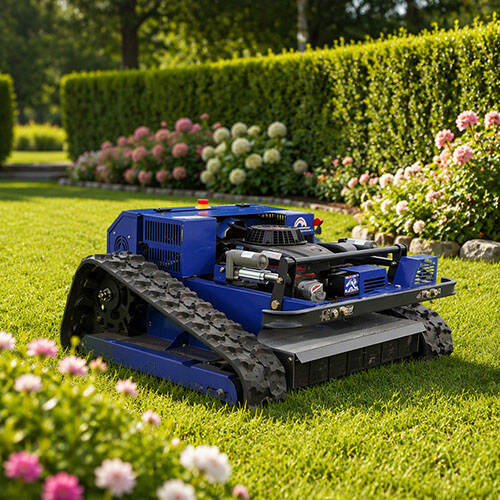
Operator skill comes from repetition on easy ground. Spend the first few hours on flat, open grass and practise the movements that should become automatic: a clean stop, a controlled reverse and a steady turn.
Once those actions are predictable, move to a gentle slope with a clear escape route. Do not use the first training session to test the machine at the limit of its slope rating.
Only after the operator has completed successful work on easier terrain should the steepest part of the site be attempted. The machine should feel predictable, and the operator should already know where to stand, where the safe escape area is and how to stop the machine.
Using an RC mower well is not about fancy stick work. It is about a steady routine, a safe standing position and the discipline to stop the moment something feels wrong.
For commercial operators, it is also worth reviewing the machine's actual operating hours, wear parts and working conditions regularly. A tracked RC mower working on steep banks will experience a very different workload from the same machine used on short flat lawns, so maintenance planning should follow the real application rather than only the calendar.
If you are evaluating an RC mower for a particular slope, vegetation type or commercial application, you can contact our team to discuss the working conditions and machine configuration.
BOTTOM LINE: Steady hands, a safe stance and the habit of stopping early: that is the whole technique. Do those three things consistently, and the machine can do the work it was designed to do.
A beginner should not start on a steep or difficult slope. Training should begin on flat, open ground, with the operator learning the transmitter, emergency stops, reversing and basic steering before moving to more demanding terrain.
Check the cutting attachment, deck, tracks, rollers, belts, guards, battery or fuel system, transmitter and emergency-stop functions. The loss-of-signal response should also be tested according to the manufacturer's instructions before working in a hazardous area.
The operator should remain in a position that provides a clear view of the machine and a safe escape route. On a slope, the high side is generally preferable when the site allows it. Never stand below the machine or in its direction of travel.
Use the emergency-stop procedure and do not approach the machine until it is confirmed stationary. Once safe, check the transmitter battery, antenna and receiver status. If the signal problem cannot be resolved, stop the operation rather than continuing on a slope.
Start with several hours of practice on flat, open ground. Then move to a gentle slope with a clear escape route. Build up gradually rather than immediately testing the machine at its maximum rated slope.
Get instant pricing, specs, and shipping details from our team.