
86 13686388557

Date:2026-10-27
Troubleshooting Field Note — For gas, diesel and electric tracked RC mowers working on slopes, soft ground and heavy vegetation
A tracked remote‑control mower does not overheat simply because it lacks power. Overheating occurs when heat is generated faster than the system can dissipate it — and on steep slopes cutting tall thick grass, this balance breaks down very quickly. Overheating traces back to three root conditions: blocked air intake, excessive operating load, or cooling fan / ducting failing to move sufficient air. Identify which condition applies, and in most situations the fix will be low‑cost. This field troubleshooting guide applies to gas, diesel and electric tracked RC mowers operating on slopes, soft ground and heavy cover.
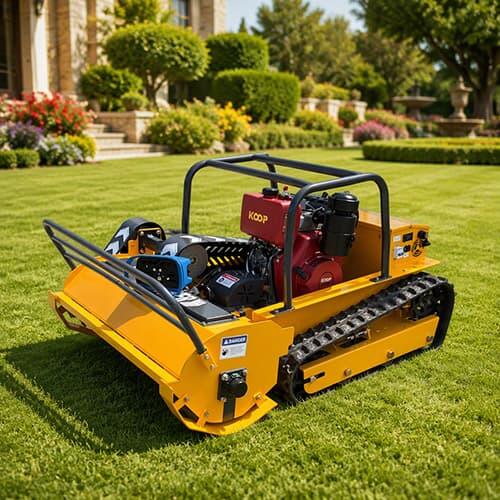
A tracked RC mower produces heat in two key areas: the prime power unit (combustion engine or electric motor), and the drive circuit including hydraulic pumps, drive motors and motor controllers. Heat dissipates via radiators, oil coolers and the machine main frame. Overheating is almost never caused purely by high‑ambient air temperature. It always comes down to a simple formula: heat generated > heat removed.
On flat ground cutting short grass, there is a large built‑in thermal safety margin and temperature gauges will barely move. Operating on a 25‑degree slope cutting chest‑high fescue changes everything. The flail deck consumes heavy cutting load, track pumps work continuously under high demand, and the radiator draws in large volumes of fine grass dust. This is when the thermal safety margin disappears entirely.
Practical field tip for troubleshooting: within the first sixty minutes of diagnosing an overheating fault, inspect airflow entering the radiator cooler stack first, do not jump straight to engine parts. Nine times out of ten, cooling fins are packed full of grass dust while the fan itself remains fully functional.
1. Grass and dust packed inside the cooler stack (No.1 root cause)
Grass clippings, plant chaff and road dust build a dense felt‑like layer lodged between radiator and oil‑cooler fins. Even if the fan runs at full speed, almost no air can pass through.
Fix: Use compressed air blowing from engine side outward, never reverse direction. Low‑pressure garden hose also works, spray straight through cooling fins. Perform this cleaning at the end of every shift for slope‑mowing work.
2. Severely clogged air filter
A blocked air filter starves the engine, forcing rich fuel mixture which generates excess heat.
Fix: Remove filter element, tap loose debris and hold it up against light. If you cannot see daylight through media, replace the filter. For foam pre‑cleaners, wash with soapy water then re‑oil lightly. Too much oil will seal pores and create the same symptoms as a fully‑clogged filter.
3. Excessive deck load: wet grass, tall vegetation, dull flail hammers
Cutting wet heavy June grass can double mechanical load within a single pass. Blunt hammers drag through vegetation instead of cleanly shearing it, forcing the engine to labour at elevated RPM. Clumped grass underneath the deck creates hidden load that reads on power system even on level ground.
Fix: Raise cutting height one notch, remove half the vegetation volume in first pass and return later for finishing. Keep flail hammers sharp and ensure they pivot freely on mounting pins.
4. Overheated hydraulic oil
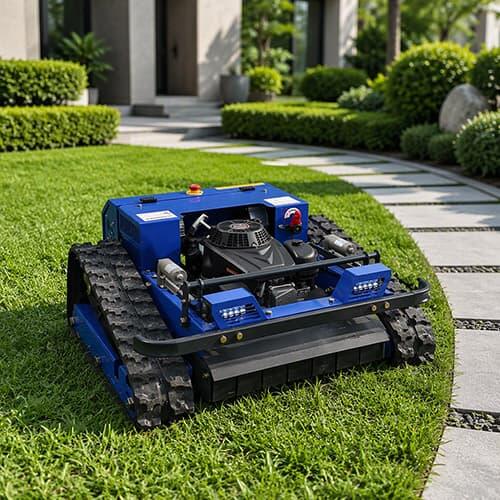
This is often a quiet, easily‑missed fault on tracked units. Pumps and track motors heat circulating oil. Once oil temperature rises above roughly 85‑90°C, oil viscosity drops, internal bypass occurs. Tracks may creep or lose power while engine temperature still looks normal.
Fix: Inspect return‑line filter, confirm bypass valve is fully seated. Allow hydraulic oil to cool down completely before making assumptions about engine faults.
5. Operating too steep, too long, or too fast
Tracked RC mowers deliver far superior slope‑holding capability compared to wheeled equipment, but hydraulic pumps still work at maximum output during extended steep‑grade operation.
Fix: Work steep slopes in short horizontal segments, return to flat ground for one‑minute cooling intervals. If temperature enters amber warning zone, pause slope work and resume during cooler parts of day.
6. Over‑tightened tracks
Excessive track tension creates extra drag against idlers and sprockets. Drive motors consume extra power and generate excess heat; operators may notice heavy sluggish movement plus hot‑rubber odour.
Fix: Measure track sag at mid‑point between rollers, cold machine typical spec is 30‑35 mm. Adjust to factory specification, never tension tracks “as tight as possible”.
7. Damaged cooling fan or broken shroud
Cracked shroud allows recirculation of already‑hot air. On gas‑powered models, slipping fan belt or mud‑packed fan cowl produce identical cooling loss.
Fix: At idle you should feel strong steady suction at cooling grille. If airflow feels weak with clean cooler stack, fault lies with shroud, belt or fan assembly — not radiator core itself.
8. Fuel‑system restriction or electrical resistance drag
Fuel starvation from a partially‑clogged carburettor or dirty filter forces engine to work harder to maintain output. For electric units, voltage drop at controller shows up as heat at cable connectors rather than deck area.
Fix: Use fresh fuel, replace fuel filter and check secure ground connections. For electric machines, touch battery cables after heavy‑load passes; hot‑running connectors indicate loose terminals.
9. Skipping post‑operation cool‑down before shutdown
If you shut down engine immediately after heavy slope work, oil circulation stops while engine block still holds large heat mass. Heat bakes oil and leaves hard deposits on valve components.
Fix: Two‑minute idle period with blades disengaged and machine sitting on level ground, every single shutdown.
Clean cooler stack every shift. Thirty‑second compressed‑air or low‑pressure hose maintenance preserves your thermal safety margin at almost zero cost.
Monitor actual load instead of just working to fixed time targets. Tall wet vegetation demands higher cutting height plus split‑pass mowing. A single over‑demanding pass is what pushes temperature into red warning zone.
Cool‑down is mandatory part of workflow. Two‑minute idle, blades off, on level ground. Add this step onto your shutdown checklist if needed.
If temperature gauge still climbs after cleaning cooler stack, installing fresh air filter and adjusting tracks to correct tension: cease operation. Further investigation will point toward failing pump, thermostat or motor‑controller hardware. Continuing to run while overheated will turn a routine service call into expensive major component rebuild.
A properly‑functioning RC mower runs cool and uneventful during normal work. Overheating is the machine’s signal that it is being forced to handle more load than it should process all‑at‑once.
You can view real‑world field troubleshooting examples on our TikTok channel. Browse our tracked RC slope‑mower range at our Made‑in‑China store page.
If you meet persistent overheating problems with your RC mower fleet, share your operating conditions with our engineering team via WhatsApp.
Get instant pricing, specs, and shipping details from our team.