
86 13686388557

Date:2026-10-26
The ground decides the method. The machine only carries it out.
Difficult‑terrain vegetation control is not purely a mowing challenge. Fundamentally it is a ground‑contact problem with a mowing attachment fitted on top. Slope steepness, soft soil pockets, ditch lines, and tangled stalk‑and‑twig growth all set conditions long before the cutting blades ever spin. If you treat terrain factors as afterthoughts, even the highest‑quality mowing deck will under‑perform. When you treat ground conditions as the core of the job, a tracked RC mower stops being a fancy novelty and becomes the most practical available tool. Drawing from our field‑test observations with landscape and municipal crews, below we lay out proven workflows for tough sites.
Walk the full site boundary with your machine parked. Document three key details: slope‑face angle, the softest 10‑metre sections, and any strips with dense overgrowth capable of concealing buried rock. Everything else is secondary detail. Slope angle tells you whether cross‑cutting is feasible or whether mowing should be avoided entirely. Soft‑soil zones reveal whether tracked undercarriage is mandatory. Heavy‑growth sections show what obstacles your deck will encounter during operation.
A smartphone clinometer delivers sufficiently accurate slope readings. Take measurements on dry days and also the morning following rainfall. If wet‑condition readings differ significantly from dry‑day values, that wet‑weather figure represents your real‑world operating limit. Brochure slope ratings are collected on firm, compacted dry test surfaces; most real‑world job‑site ground never matches those ideal lab conditions.
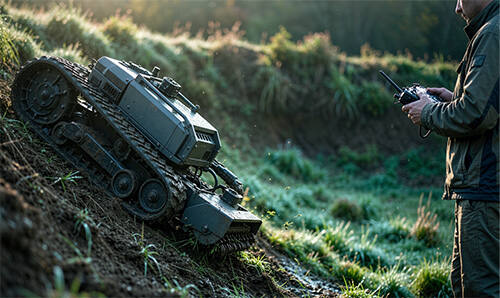
On any gradient steeper than gentle lawn terrain, operate your tracked RC mower travelling horizontally across the slope face. Avoid travelling straight up or down inclines. Up‑and‑down climbing consumes available traction and turns minor slipping into uncontrolled downhill run‑away events. Horizontal cross‑cutting keeps full track surface in contact with soil and centres machine weight evenly across both track assemblies. This single operating habit separates clean consistent mowing jobs from time‑consuming machine‑recovery work.
Complete two shallow cutting passes instead of attempting one single aggressive deep cut. Set a higher cutting height for your initial pass, then return one day later for the finishing cut. Though this looks slower on paper, this method delivers even grass results while preventing the machine from fighting excessive vegetation load. Monitor for downhill drift rather than fixating purely on clocked working hours. If the unit drifts downhill more than a boot‑length within one cutting pass, stop work. Surface conditions are too wet or too loose for safe operation on that slope grade.
Ditch lines, pond margins, recently‑worked fields, and storm‑disturbed logged ground all fail in the same predictable pattern: the machine sinks into soil well before the engine shows signs of labour. Additional horsepower cannot pull a machine out of self‑dug ruts; favourable ground‑pressure performance from tracked undercarriages solves this problem.
This is where tracked RC platforms deliver their greatest value. Wide rubber tracks spread total machine weight across an extended contact patch so the unit rides on top of surface vegetation instead of punching down into mud. You can identify good performance by what you leave behind: flattened grass rather than deep wheel or track ruts. If tracks sink all the way down onto the rollers, incorrect track tension is not the root cause. The ground itself is telling you to pause operations, or to begin cutting inward starting from stable dry‑ground edges.
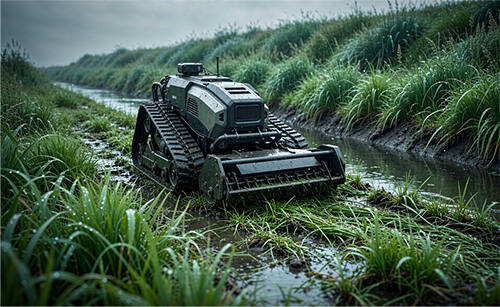
Vegetation growing on difficult terrain is almost never pure turf grass. It consists of leftover stalks, seasonal weeds, small woody twigs, and sometimes buried wire or half‑submerged fence posts. Rotary decks perform poorly with this mixed growth: they either stall against thick stems or eject hard debris at high velocity. The flail deck is the correct solution: hinged short hammers yield upon impact, shred stalks into mulch, and deposit material directly on‑site. There are no leftover windrows requiring follow‑up collection and no mid‑pass chute clogging.
Set a high cutting height for your first pass over heavily overgrown ground. Your priority is volume clearing, not perfect lawn‑quality finish. Lower deck height for your secondary finishing pass. Trying to mow knee‑high overgrown banks in one single pass is a common source of snapped drive belts and dangerous situations where operators must approach a slope with blades still spinning.
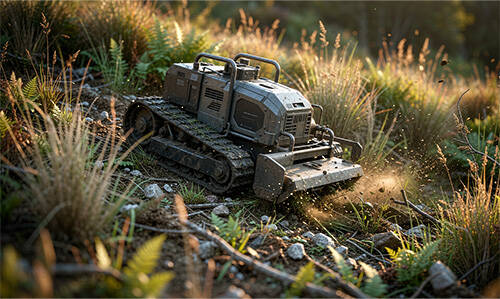
A huge portion of working hours on difficult‑terrain sites gets spent along transition zones: slope toes, ditch banks, and the dividing line between mow‑able ground and completely impassable terrain. Tracked RC mowers change this workflow dynamic, because operators no longer sit onboard the machine. Edge trimming can be completed while personnel stay positioned on adjacent safe flat ground instead of working from within the hazardous zone.
Work perimeters first. Cut a clean flat safety strip around hazards before you move inward to mow the main slope face. This perimeter strip acts as your machine‑recovery zone, turning area, and secure operator position for complex remote‑control movements. Never begin slope‑face mowing without establishing this safety perimeter first.
Experienced crews schedule vegetation management around ground‑surface conditions rather than rigid calendar dates. Clay‑rich soil after rainfall means delay heavy cutting work; return once surfaces firm. Sandy slopes maintain workability longer but risk material balling up underneath decks. North‑facing slopes retain moisture and support thicker growth; these sections should be marked as off‑limits immediately after rain, not treated as optional suggestions. Build weather‑driven work deferrals into your weekly planning, just as you plan regular mowing tasks. One day paused due to muddy ground costs far less than a tractor extraction to rescue a stuck mower.
Tracked RC equipment also unlocks extra usable weather windows unavailable for wheeled fleets. Twenty‑four hours after rainfall, when crews with wheeled machines must wait for turf to cure, tracked units can safely operate on many slope faces. This is no marketing spec‑sheet trick; during wet growing seasons it can deliver two additional functional work days each week.
Measure slope angle and surface conditions for both wet and dry scenarios; confirm realistic operating limits before you start the engine.
Evaluate soft‑soil zones starting from stable dry edges. If ground cannot support track weight, no machine setting will make it safe.
Cut perimeter safety strip first, then work inward across slope faces; always use horizontal cross‑cutting, avoid downhill runs.
High deck height for first clearing pass, lower height for finishing pass. Prioritise clearing volume before cosmetic finish quality.
Check for downhill drift every three passes. More than boot‑length drift means stop and reassess ground conditions.
Inspect mowed ground after finishing work, do not simply drive away. Physical track and cut marks reveal more than remote‑controller screen feedback.
Vegetation management on challenging terrain is unglamorous work centred on respecting natural ground limits instead of fighting against them. The tracked RC mower excels because it removes personnel from hazard zones and keeps track assemblies out of deep ruts — not for faster mowing performance on flat lawns. Follow this core workflow: assess site ground conditions first, use horizontal cross‑cutting patterns second, and assign the machine to handle work that no crew member should ever stand upon. You can watch difficult‑terrain field operation clips on our TikTok channel. You can view suitable tracked RC mower models for tough sites at our Made‑in‑China store page.
If you need workflow guidance for your own difficult‑terrain projects, discuss your site parameters with our engineering team via WhatsApp.
Get instant pricing, specs, and shipping details from our team.