
86 13686388557

Date:2026-10-16
The first repair bill is when most owners find out what they actually bought.
There is a point, often a few months after buying a budget remote control mower, when the purchase price starts to look very different. A gear shears. A battery no longer holds its charge. A belt stretches and slips. The owner opens the original paperwork, looks for a part number, and discovers that finding the replacement is harder than expected.
That is when the real ownership cost starts to become visible.
This is not an argument against inexpensive machines. There are capable lower-cost mowers, and some are exactly right for a small, flat and regularly maintained property. The problem is that very different machines are often sold under the same description: remote control mower. A light-duty machine and a work-grade machine can look surprisingly similar in a product photograph while having very different chassis construction, drive systems, batteries and parts support.
The difference is not necessarily visible when the machine is new. It becomes visible after hours of actual work.
Below are the areas where the money usually goes after purchase, in the order an owner may encounter them.
On a mower, the chassis is not simply an outer shell. It is the structure that keeps the cutting system aligned, supports the deck and keeps bearings and drive components seated correctly.
When the structure bends or cracks, the damage can spread. A blade running out of plane creates vibration. Continued vibration puts additional load on bearings. Bearing movement can affect the spindle, and once the spindle is no longer running correctly, the quality of the cut starts to deteriorate.
By the time the operator notices that the mowing result has changed, several components may already have been affected.
Lower-cost machines may use thinner stamped steel or reinforced plastic in areas where a heavier structure would normally be used. A material can look perfectly acceptable in a product photograph and still have limited resistance to repeated impact underneath the machine.
The underside of a mower sees rocks, roots, stumps, frozen ground and repeated impacts when the deck drops into a rut. For this reason, deck material and reinforcement deserve attention during the buying process.
A quality deck may use 10 to 12 gauge steel or cast aluminum, often with additional reinforcement around high-load areas. The exact material is only one part of the assessment, but the basic engineering principle is straightforward: a structure that maintains its shape under repeated loading protects the components attached to it.
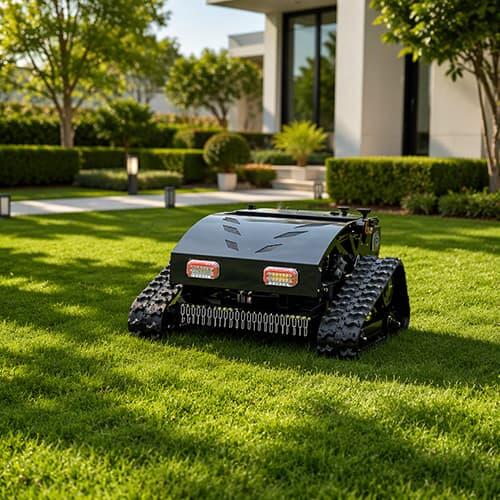
Nobody sees the grade of the gears inside a mower from the outside, which is one reason drivetrain quality is easy to overlook during a purchase.
Brushed drive motors generate heat and their brushes wear with use. The source material estimates roughly 500 to 1,000 hours under intermittent use for brushed drive motors, compared with around 3,000 to 5,000 hours for brushless DC motors under the stated conditions. The actual service life still depends on load, duty cycle, cooling, maintenance and component quality.
For a machine working only a few hours per week, that difference can represent several seasons of use.
The failure often does not appear as a sudden motor breakdown. The mower may gradually become less capable in thick grass that it handled easily when new. The operator may blame the vegetation, increase the working load or simply assume the machine is getting old.
In reality, reduced motor output can increase the load on belts and gears. Once a belt begins slipping under load, or gear teeth begin wearing unevenly, the original motor problem can turn into a wider drivetrain repair.
When comparing an RC mower, ask what type of drive motor is used, what the gearbox is designed for, whether replacement motors and gears have identifiable part numbers, and whether those components can actually be purchased after the machine is out of warranty.
A battery specification should never stop at the word “lithium.” The battery pack, cells, battery management system and replacement availability all affect the actual ownership cost.
A quality battery pack uses identified cells and a suitable battery management system that can handle functions such as cell balancing, over-discharge protection and temperature monitoring. The source material uses approximately 80% retained capacity after 500 charge cycles as an example of a quality pack, while a generic pack without appropriate management may degrade much faster.
These figures should be treated as reference conditions rather than a guarantee for every battery. Cell chemistry, discharge depth, temperature, charging method, storage conditions and load all affect battery life.
On an RC mower, battery degradation becomes noticeable under load. Blade speed can fall in heavy grass, the machine may require more frequent charging, and working sessions become shorter.
That can create a cycle where the operator charges more frequently and runs shorter jobs, while the battery itself continues to age. Eventually the replacement question appears.
This is where a cheap machine can become unexpectedly expensive. If the battery is a non-standard size and the seller does not keep replacement packs available, the owner may have a working mower with no practical battery supply.
When comparing models, do not accept only “Lithium battery included.” Ask for the voltage, capacity, battery management system, charging specification and replacement part number.
A specification such as 48V 20Ah with BMS and an identifiable replacement part number tells a buyer considerably more than the word “lithium.”
A lost remote-control signal on flat ground is already a problem. On a slope, beside a road, near water or around obstacles, the consequences can be much more serious.
A quality remote-control system should have a defined fail-safe response. Depending on the machine design, loss of the communication link should cause the mower to stop its drive and place the cutting system into its specified safe state rather than continuing to travel without operator control.
The exact radio technology is only part of the evaluation. What matters to the buyer is how the complete control system behaves when the connection is interrupted.
A cheaper transmitter may have a shorter practical range, weaker interference handling or less developed fail-safe behavior. If an operator has to remain within an unusually small working area or constantly adjust the transmitter position to prevent signal problems, the limitation becomes part of the operating cost.
Do not treat signal reliability as a minor convenience feature. When an RC mower is working on slopes or in areas where the operator cannot safely approach the machine, the control system is part of the machine's safety architecture.
Before buying, ask the supplier to demonstrate what happens when the transmitter signal is intentionally interrupted under controlled conditions. A clear answer is much more useful than simply seeing a claimed remote-control range in a specification sheet.
The cutting deck has to match the material being cut. A flail deck can handle vegetation that would place a heavy load on a conventional rotary system, but it also requires more power and normally involves more maintenance.
A rotary deck is simpler and can be less expensive to operate when the property consists mainly of maintained turf. But when it encounters material it was not designed to process, the impact can be transferred directly into the spindle, blade and belt system.
Neither deck type is automatically better. The expensive mistake is buying one type because it is cheaper and then expecting it to perform the work of another.
Look at what is actually growing on the property. If the machine will regularly encounter mixed brush, woody stems and occasional hard debris, a flail system with replaceable hammers is often the more appropriate configuration.
If the property is maintained turf, a rotary or mulching deck may provide a cleaner finish with lower running costs.
This is also where attachment compatibility matters. Buying the wrong cutting system can mean purchasing the machine first and then spending more later to change the configuration.
For contractors, it is worth comparing the cost and availability of common wear parts such as hammers, blades, belts and bearings before choosing the deck.
This is one of the issues owners usually understand only after the machine has already stopped working.
A mower that needs a $40 replacement part is not a cheap machine while that part is unavailable. The part may cost only $40, but the machine can remain out of service for days or weeks while the owner waits.
For a contractor, the real cost can include a delayed job, idle labor, transportation and a customer who has to wait for the work to be completed.
That is why lead time matters almost as much as the price of the part. A $40 belt arriving in three days is a minor maintenance expense. The same belt arriving in six weeks can become a business problem.
Before buying, look for the manufacturer's parts catalogue. Replacement blades, belts, batteries, tracks, rollers and other wear components should have identifiable part numbers. If the supplier can also confirm normal stock availability and delivery time, that is stronger evidence of after-sales support.
If the only replacement method is sending a message to a seller and waiting for someone to identify the component, treat parts support as an unresolved risk rather than assuming it will be easy later.
For buyers comparing commercial RC mower suppliers, you can also review available RC mower models and configurations on Made-in-China and compare the machine specification with its replacement-part support.
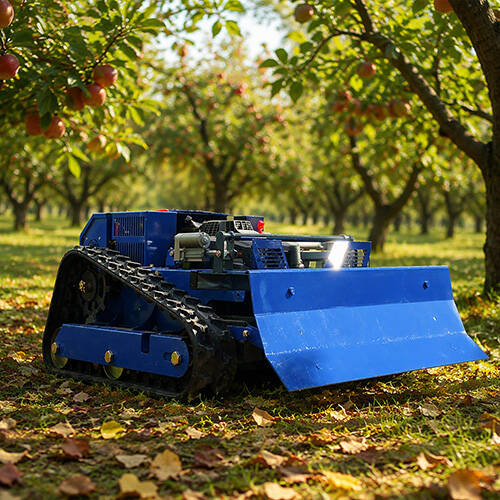
A warranty should be read as a set of conditions, not simply as a number of months printed on a sales page.
Commercial mower warranties often require maintenance records and compliance with specified service intervals. Keep service records, receipts and replacement-part information. If a problem appears later, those records can make the difference between a support claim that can be evaluated and a dispute over whether the machine was maintained correctly.
Before buying, call the supplier or dealer and ask practical questions. How long does a replacement track normally take to ship? Who handles technical problems? Are wear parts available directly? Does the seller service the machines it sells?
The answers often tell you more about the supplier's after-sales system than the warranty headline itself.
For an imported machine, also confirm who is responsible for technical support after delivery and whether common replacement parts can be shipped internationally.
The purchase price is not the entire financial picture because the machine still has a value when you eventually replace it.
A three-year-old commercial-grade mower with documented maintenance history can retain meaningful resale value, particularly when the next buyer can verify the machine's working hours, service history and replacement parts.
A budget machine with an uncertain service history and difficult-to-source parts can be much harder to sell, even if the original purchase price was low.
This is one reason a used commercial machine can sometimes be a better purchase than a new budget machine. A well-maintained two-year-old unit may already have absorbed a significant portion of its depreciation while still having useful service life remaining.
The key is condition. Used equipment should be inspected rather than judged only by age. Check the chassis, deck, drivetrain, battery, tracks or wheels, control system and maintenance records before making the comparison.
For a homeowner, a broken mower may mean an overgrown property and a lost weekend. For a contractor, the same breakdown can leave a crew waiting and push a scheduled job into another day.
That is why purchase price should always be compared with expected working time.
For example, a machine that costs $1,500 more but provides reliable service over five years represents an additional $300 per year before considering resale value or other ownership costs. On the other hand, a machine that costs $500 but spends several weeks unavailable during each working season can quickly become more expensive in practical terms.
If you charge for your labor or operate a commercial mowing business, calculate the value of the hours the machine is expected to work. Downtime should be treated as a real cost rather than an unfortunate side effect of buying cheaply.
For a homeowner, the calculation is different, but the principle remains the same: a lower purchase price is useful only if the machine continues to perform the work you bought it for.
None of this means that you need to spend five thousand dollars to get a good machine. The RC mower market has developed considerably, and there are capable mid-range machines that balance purchase cost, durability and equipment configuration.
The point is that price should not be the first number you compare.
Look at the deck material. Look at the motor type. Look at the battery voltage, capacity and management system. Check how the machine responds when the transmitter loses its connection. Look for a real parts catalogue with identifiable components. Read the warranty conditions and understand what maintenance is required.
Then calculate the expected cost per year of service rather than comparing only the number shown at checkout.
A low purchase price does not automatically mean poor quality, just as a high price does not automatically guarantee a better machine. What matters is whether the construction, drivetrain, battery, cutting system, control system and after-sales support match the work the mower is expected to perform.
If you are comparing RC mower configurations for commercial mowing, slopes, brush or regular property maintenance, you can contact our team through WhatsApp with your working area, vegetation type and terrain conditions so the machine configuration can be discussed around the actual job.
No. A lower purchase price does not automatically mean a machine is poorly built. The important question is whether the chassis, drivetrain, battery, cutting deck, control system and parts support are appropriate for the intended workload.
Start with the actual working conditions. Then check the chassis construction, drive system, battery specification, deck type, remote-control fail-safe behavior and replacement-part availability. For commercial use, after-sales support and downtime should also be part of the calculation.
Do not compare only the purchase price. Compare expected service life, battery replacement cost, common wear parts, maintenance requirements, warranty conditions, parts lead time, downtime risk and expected resale value.
It can be. A flail deck normally has more wear components and may require more maintenance. However, if the property contains brush, woody stems or difficult vegetation, the flail system may be better matched to the work and reduce the need for repeated passes or unsuitable equipment.
Because a relatively inexpensive component can keep the entire mower out of service if it cannot be sourced quickly. For commercial users, the cost of downtime can be much higher than the price of the replacement part itself.
Sometimes. A properly maintained used commercial machine can offer better construction and a more established parts supply than a new budget machine. However, inspect the actual condition, service history, battery, drivetrain, deck and control system before buying.
Get instant pricing, specs, and shipping details from our team.