
86 13686388557

Date:2026-03-27
As the landscaping industry continues to evolve across Western markets, both professionals and property owners are re-evaluating the tools they use for lawn maintenance. One of the most discussed comparisons today is between the remote control lawn mower and the traditional lawn mower. Each option has its advantages, but when it comes to efficiency, safety, and long-term cost, the differences are becoming increasingly significant.
A remote controlled mower represents a modern approach to lawn care, allowing operators to control the machine from a distance. In contrast, traditional lawn mowers require direct physical operation, either by pushing or riding. For a general overview of mower types, you can refer to Wikipedia: Lawn Mower.
Efficiency is one of the most important factors for landscaping businesses. A remote control lawn mower significantly improves productivity, especially when working on large or complex terrains. Operators can control the mower remotely without physical fatigue, allowing for longer working hours and more consistent performance.
Traditional mowers, on the other hand, rely heavily on manual labor. Whether using a push mower or a ride-on model, the operator must remain physically engaged at all times. This can lead to fatigue, reduced efficiency, and slower job completion, particularly on large properties.
In challenging environments such as hills and uneven ground, a remote control lawn mower for hills provides a clear advantage. Many models feature tracked systems, making them more stable and capable of maintaining consistent cutting performance.
Safety is a critical concern in both residential and commercial landscaping. Operating traditional mowers on steep slopes or near roadside areas can expose workers to serious risks. A slope lawn mower with remote control functionality allows operators to stay at a safe distance, significantly reducing the likelihood of accidents.
Traditional lawn mowers require direct operation, which increases the risk of slips, falls, or contact with moving blades. In contrast, remote control grass cutting machines enhance operator safety by removing the need for close proximity to the machine during operation.
Many tracked lawn mowers also include safety features such as emergency stop systems and anti-slip tracks, further improving reliability in hazardous conditions.
When comparing costs, it is important to consider both initial investment and long-term expenses. A remote control lawn mower typically has a higher upfront cost due to advanced technology and engineering. However, it can deliver significant savings over time by reducing labor requirements and improving operational efficiency.
Traditional lawn mowers generally have a lower purchase price, making them more accessible for small-scale users. However, ongoing costs such as labor, maintenance, and potential safety risks can add up over time, especially for commercial landscaping businesses.
Businesses looking to invest in advanced equipment can explore global sourcing platforms such as
Made-in-China, where a variety of commercial remote lawn mowers are available with competitive pricing and detailed specifications.
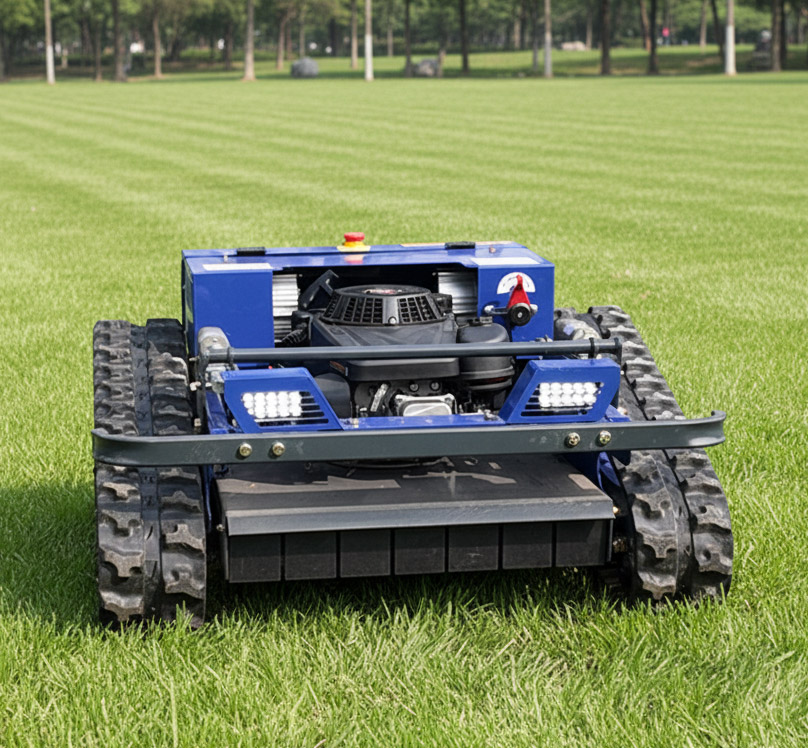
One of the key advantages of remote control lawn mowers is their integration of modern technology. Features such as wireless remote systems, adjustable cutting settings, and even semi-autonomous capabilities make these machines highly adaptable to different environments.
In contrast, traditional lawn mowers have seen limited innovation in recent years. While improvements have been made in engine efficiency and ergonomics, they still rely heavily on manual operation.
Leading manufacturers such as Husqvarna are continuously developing advanced solutions that combine automation, performance, and sustainability.
Visual demonstrations have become an important factor in purchasing decisions. Platforms like TikTok allow users to see remote control lawn mowers operating in real-world conditions.
These videos often showcase slope performance, cutting efficiency, and maneuverability, helping buyers understand the practical benefits of switching from traditional equipment to a remote controlled mower.
Choosing between a remote control lawn mower and a traditional mower depends on your specific needs. For small residential lawns, a traditional mower may still be sufficient. However, for large properties, commercial landscaping, or challenging terrains, a remote-controlled solution offers clear advantages.
A heavy duty remote mower is particularly suitable for professional use, where efficiency, safety, and long-term cost savings are critical factors. As the landscaping industry continues to evolve, more businesses are recognizing the value of investing in advanced equipment.
The comparison between remote control lawn mowers and traditional lawn mowers highlights a clear shift toward smarter, safer, and more efficient solutions. While traditional mowers still have their place, the advantages of remote-controlled technology make it an increasingly attractive option for modern landscaping businesses.
By carefully evaluating efficiency, safety, and cost, users can make informed decisions that align with their operational needs and long-term goals.
Get instant pricing, specs, and shipping details from our team.